
How to get more work as a tradesman
 By Surinder Ahitan · Independent SEO Consultant · Slough + Farnham Common
TL;DR
- SEO for tradesmen is mostly local SEO. Most of the result comes from a well-run Google Business Profile, real reviews, and a few sharp service-by-location pages. The fancy website is a small part.
- Paying directories for leads rents you a channel you never own. Doing your own SEO is slower to start, but the jobs keep coming after you stop paying.
- The highest-return hours you can spend: claim and fill in your Google Business Profile, set your trade categories and service area correctly, and earn reviews slowly from real customers.
- UK trust signals like TrustMark and Gas Safe registration are free, verifiable, and most trades never use them online.
- A fast site that turns a visit into a quote request matters more than a pretty one. Speed and a simple quote form do the quiet work.
To be honest, the most useful answer to “how do I do SEO for tradesmen” is short: claim and properly fill in your Google Business Profile, build a clear page for each job you do in each town you cover, and earn reviews slowly from real customers. That is most of the job.
This post is the longer version of that answer. It is written for a plumber, electrician, builder, roofer or any other trade who keeps hearing they “need SEO”, is tired of paying a directory for every lead, and wants to know what actually brings in booked work.
What actually brings a tradesman more work?
Most of it comes down to showing up when someone nearby searches Google for the job you do. Things like “emergency electrician near me”, “boiler repair Slough”, “leaking tap plumber”, or “flat roof repair near me”.
Almost all of those searches are local, and most happen on a phone while the person already has a problem they want fixed today. Google answers them in two places: the local pack (a small map with three businesses pinned to it) and the normal blue links below it. For a trade, that map is where most of the calls come from.
So the job is not to write a clever 2,000-word essay about pipework. The job is to be one of the businesses Google trusts enough to show when a nearby person needs your trade. That is why local SEO is almost always the first thing I’d fix for a tradesman.
Why paying directories for leads is a leaky bucket

Most trades start out with a lead-generation directory. You pay a monthly membership or a fee per lead, the platform sends you enquiries, and you bid against everyone else on the same list. It feels like marketing because money goes out and some work comes in.
The problem is what happens when you stop paying. The leads stop the same day, because the channel was never yours. You were renting a spot on someone else’s website, and the rent only goes one way over time. You also share every lead with three or four other trades, so you are quoting against the same people on every job and your margin gets squeezed at both ends.
Your own organic channel works the other way round. The Google Business Profile, the reviews, and the pages you build are assets you keep. They take longer to start producing, but once they rank, the enquiries arrive without a per-lead charge, and they come to you alone, not to a shared shortlist. That is the whole case for owning your channel instead of renting one.
Is SEO for tradesmen really just your Google Business Profile?
For most trades, yes, the Google Business Profile does more work than the entire website. It is the asset that feeds the local map, and the map is where the high-intent searches land.
Google explains its local ranking as a mix of three things: relevance, distance and prominence. Relevance is whether your profile clearly says you do the job being searched for. Distance is how close you are to the searcher. Prominence is how the wider web treats you as a real, trusted business, which is heavily driven by reviews.
You can’t change your distance, but you control relevance and prominence almost entirely through the profile. That is the unglamorous 80% nobody wants to hear. No redesign, no keyword tricks. Just a profile that is complete, accurate and active.
How do you set up a tradesman’s Google Business Profile properly?

Claim it, verify it, then fill in every field as if a stressed homeowner will judge you on it, because they will. A complete profile beats a half-finished one in both ranking and clicks, and most trade profiles are half-finished.
The parts that matter most for a trade:
- Verify it. Follow Google’s steps to verify your business so you own the profile and can edit it. Verification can be instant or take a few days.
- Set it up as a service-area business. Most trades work from home or a van, not a shopfront. You can hide your home address and list the towns you actually cover instead, which is exactly how Google expects a mobile trade to be set up.
- Pick the right category. Choose the most specific business category that fits, for example “Electrician” or “Plumber”, not just “Contractor”. Add secondary categories for the other real services you offer.
- Add real photos. Upload genuine shots of finished work, your van, and you on a job. Google says your photos and videos show on the profile once it is verified, and for a trade they are the difference between a call and a scroll-past.
This is the Google Business Profile work that returns the most per hour for any tradesman. It is free, and most of your local rivals have not done it properly.
What pages does a trade website actually need?
A trade website does not need to be big. It needs one clear page for each main job you do, and a separate page for each town you genuinely cover. That structure is what lets you rank for “boiler repair Slough” and “boiler repair Farnham Common” instead of hoping one vague home page covers everything.
The common mistake is mashing every service and every town onto a single home page. Google can’t tell what that page is for, so it ranks for none of it well. The fix is boring but it works: one service per page, written for a real person who has that exact problem right now.
If geography drives your bookings, add a page per town in your catchment. A plumber covering Slough and the surrounding M4 corridor wants a real page for each area, with local detail, not the same paragraph with the town name swapped. Done well, this is the heart of tradesman SEO in the UK, and it is the part a proper website build sets up from day one.
Do reviews matter for tradesmen?

Yes, more than almost any other factor. Reviews are both a ranking signal and the thing a worried homeowner trusts most when they are letting a stranger into their house.
The data on how much people rely on reviews is consistent. BrightLocal’s review survey finds that the large majority of consumers read online reviews before choosing a local business, and Google is where most of them read and write. Star rating, review count and how recent the reviews are all feed the decision.
Here’s what I’d actually do. Build a simple, honest request flow:
- Ask the customer for a Google review at the right moment, usually right after you have finished the job and they are pleased. A text with the link works well for trades.
- Reply to every review, good or bad, in a normal human voice.
- Never offer money off for a review, and never write them yourself.
- If you collect numbers or emails to ask, keep it within ICO guidance on electronic marketing.
The slow honest path is the only one that holds up.
The UK trust signals most tradesmen forget to use online
Some of the strongest trust signals for a UK trade are free, official, and almost never used on the website. For work people are nervous about, “is this person properly registered and safe” is a real question, and you can answer it before they even ask.
TrustMark is the only UK Government-Endorsed Quality Scheme for work in and around the home, covering plumbers, electricians, builders and more. If you are registered, say so on your site and profile, and link it so people can check. It is exactly the kind of verifiable signal that builds trust with both customers and Google.
For gas work, the Gas Safe Register is the official list of businesses legally allowed to do gas jobs in the UK, and by law every gas engineer must be on it.
If that’s you, your registration number is a credibility marker worth showing clearly. The same logic applies to any real accreditation in your trade, so don’t bury it.
These signals won’t move rankings on their own, but they are the honest, checkable proof that turns a click into a call.
Does your website speed actually affect getting jobs?
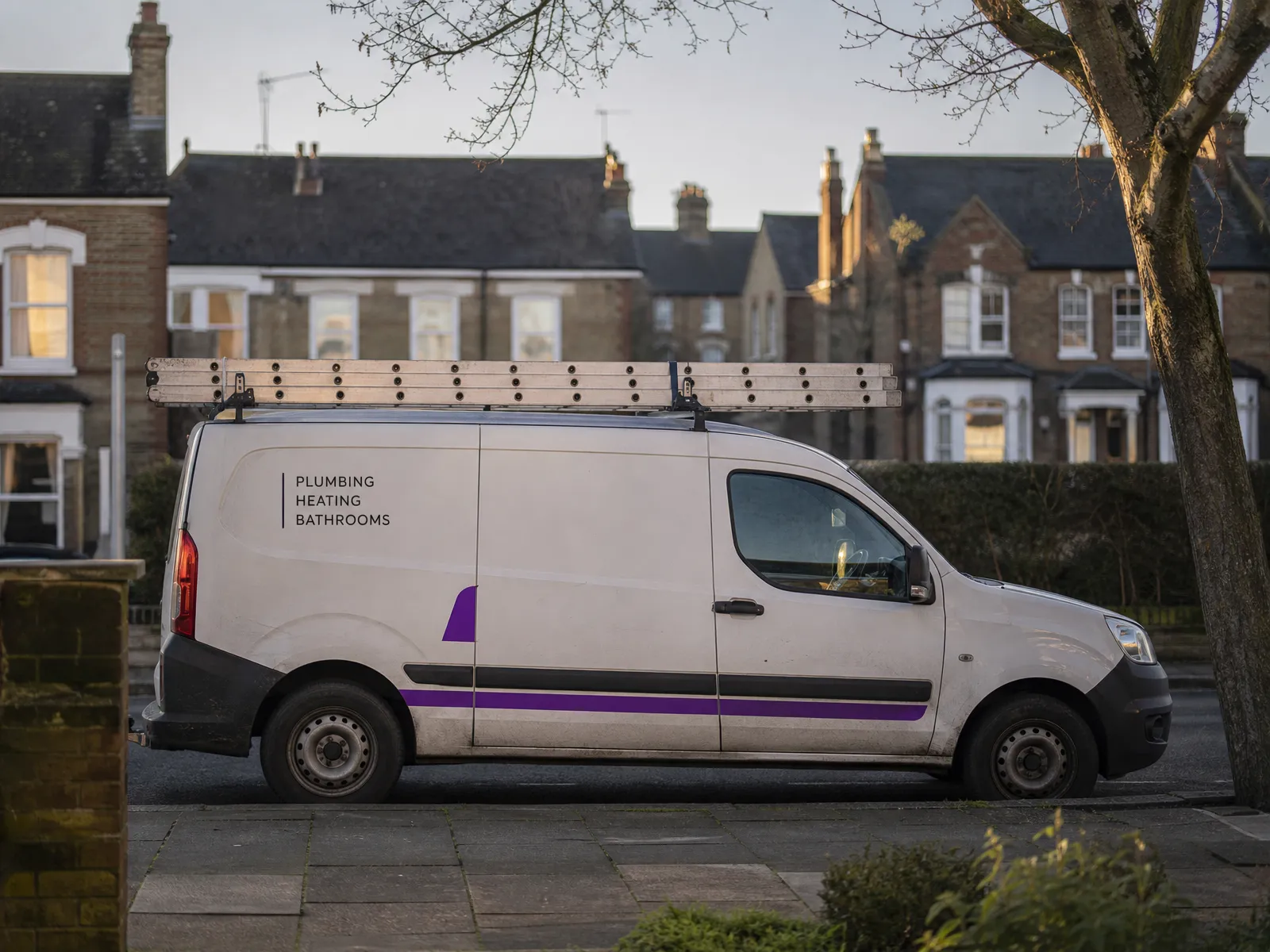
Yes, and the effect is biggest on a phone, which is where almost all of your visitors are. A slow page loses the customer before they ever see your work, even when you are the best trade in town.
Google measures part of this with Core Web Vitals, a set of real-world speed and stability scores. The headline one is Largest Contentful Paint, which should load your main content in 2.5 seconds or less. Miss that on a phone and people bounce, especially the ones in a hurry because something has broken.
Speed only matters because of what it protects: the moment the visitor decides to contact you. A fast page and a short, obvious quote form do the quiet work of turning a visit into an enquiry, which is the whole point of conversion work for a trade. Keep the form short, put your phone number where a thumb can reach it, and don’t make a worried homeowner fill in ten fields to ask for a quote.
How long does SEO for tradesmen take to work?
For a trade, Google Business Profile fixes can show up fast, often inside 7 to 14 days, because the profile is the quickest lever Google reads. The fuller local-pack lift, the kind that holds, usually builds over 2 to 6 months as reviews and pages accumulate.
That is quicker than many industries, mainly because so few trades do the basics well. When you fill in a half-empty profile, add real photos, build proper service-area pages and start earning reviews, you often move ahead of rivals who have done none of it.
It is not instant, though, and anyone promising you the top of the map this week for a competitive trade search is overselling. The compounding comes from consistency: fresh photos, new reviews, the odd new page, month after month. The trades that keep that rhythm are the ones that stop needing the directories at all.
What I’d actually do in the first 90 days
Here is the order I’d work in for a UK tradesman starting from scratch:
- Week 1. Claim and verify the Google Business Profile. Set it up as a service-area business, pick the right primary category, and add real photos of finished work and the van.
- Week 2. List the towns you cover and the main jobs you do. This is the map for your future pages, and it stops you building thin, duplicated ones.
- Week 3 to 4. Set up an honest review flow (a text with the Google link after each finished job). Reply to every existing review. Add your TrustMark, Gas Safe or trade accreditation where people can see and check it.
- Week 4 to 8. Build the website basics: a fast mobile site, one clear page per service, a page per town you cover, LocalBusiness structured data, and a short quote form.
- Week 8 to 12. Keep the rhythm. New photos and reviews monthly, the odd fresh page, and content written for people, which is what Google’s own starter guide has asked for all along.
That is 90 days. Most trades never get through it, not because it is hard, but because the work eats the week. The order matters more than the speed. This is the same playbook whether you do plumber, electrician, SEO for a builder or any other trade, because the search behaviour is the same underneath.
If you want an honest read on where your trade site sits today, book a call and bring the URL. Twenty minutes, and I’ll run the same checks I’d run by hand.
If you want me to look at your specific site and tell you what's broken, that's twenty minutes in my calendar and it costs you nothing. Book a call. Tell me what's going on.