
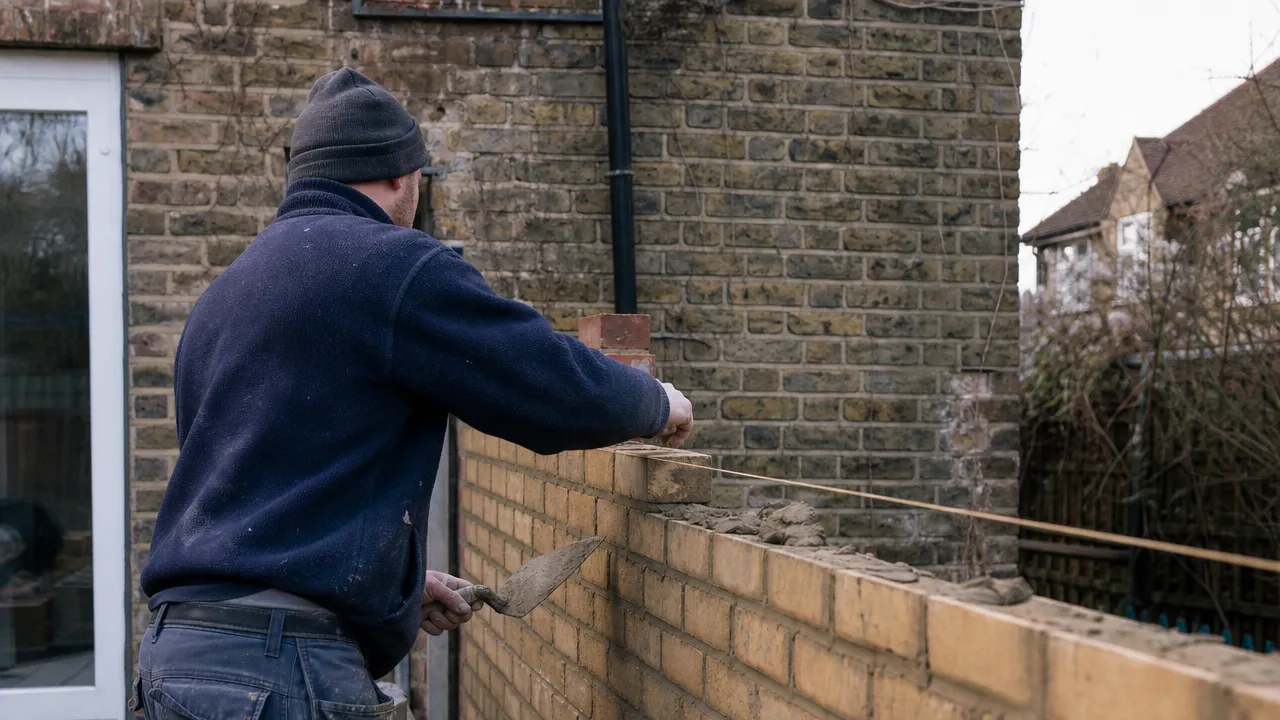
Building is the trade where the maths is easiest and the patience is hardest. One rear extension is forty to eighty thousand pounds, so a single job you would not otherwise have won covers this many times over. The catch is that the customer takes four months to decide, and most builders give up on marketing in month two.
01The trade Why builders' searches work differently.
Three things separate building from every other trade on this site, and all three change what the website has to do.
Nobody searches for a builder. They search for the thing they want built. Loft conversion, side return, garage conversion, structural alterations. The word "builder" barely appears in how your customers look for you, which is why a site with a home page and a services page competes for almost nothing.
There is a professional in the middle. By the time an extension is real, there is usually an architect and a planning application.
That means part of your audience is not the homeowner at all. It is somebody technical, deciding which two builders to put forward. Very few trades have a gatekeeper like that.
The customer is genuinely frightened. Every homeowner in the country has heard a story about a builder who took the deposit, made a mess and stopped answering. You are asking somebody to hand over more money than they have ever spent on anything but the house itself. Nothing on your website matters more than settling that.
02The levers What actually moves the needle for a builder.
- A page for the job, not for the trade Almost nobody searches for "builder". They search for a loft conversion, a rear extension, a garage conversion, a barn renovation. Each of those is a page, and each one is read by somebody who already knows what they want and roughly what it costs.
- Finished projects told as stories A twelve-week build has a beginning and an end, which almost no other trade can offer. Ten photographs from footings to handover, with what it cost and how long it took, does more selling than any amount of copy about quality and craftsmanship.
- Being findable to architects A good share of extension work arrives through the architect, not the homeowner. Architects check who they are recommending, and what they find is your site and your reviews. That is a professional audience reading you, and it changes what belongs on the page.
- Reviews that mention the money and the timescale A five-star review saying "great job" is worth little here. One saying it came in near the quote and finished the week it was meant to is worth a great deal, because those are the two things every prospective customer is frightened of.
The map pack still helps, but it matters less to you than to any other trade here. Somebody spending fifty thousand pounds does not tap the first pin. They open six tabs, read all of them, and talk to their partner about it for a fortnight.
03The deposit The trust problem, and what actually answers it.
Every enquiry you get is from somebody quietly asking one question: will this person take my money and disappear? They will not say it out loud. But it is what the whole conversation is really about, and the sites that win are the ones that answer it before anybody rings.
What answers it is specific and slightly boring:
- Your public liability figure, in numbers.
- How you stage payments, written down.
- FMB membership if you have it, because they inspect before they let you in.
- Any warranty or NHBC cover.
- Photographs with faces in them, so it is obvious there are real people behind the company.
What does not answer it is the word "quality", a stock photograph of a hard hat, or fifteen years of experience stated without a single finished project to look at.
04The site What a builder's website has to do.
Two things: rank for the job types you want more of, and make a nervous person feel safe. Everything else is decoration.
Ranking for job types means a real page each, extensions, loft conversions, renovations, whatever you actually want to be doing in two years. Not a list on one page. A page, with your own photographs of that exact type of job, and a price range.
The safety half is your project stories. A build is the only trade work with a proper narrative. Here is the house before, here is the steel going in, here is the family in it at Christmas. Three of those, told properly, will out-sell any home page copy I could write for you.
07700 900185
Mobile
Included, and it runs on its own
A missed call still becomes a job.
This is the same system every site here is wired into. The text goes out whether you remember or not.
- It fires in about eight seconds Before they have scrolled to the next name in the results.
- They reply while it is still in their head And it is waiting for you when you come down off the job.
- You do nothing at all Evenings, weekends, and the days you leave your phone in the van.
05The price What it costs, and what you get.
£297 a month. The website, missed-call text-back, a review funnel, follow-up on every enquiry, one inbox and a business number.
No build fee and no minimum term, which matters in a trade where a bad quarter is normal and a good one is a year's work. The full breakdown is on the pricing page.
The follow-up matters more for you than for anyone else on this site, because your sales cycle is months long. An enquiry in March about a summer extension goes quiet while planning goes in, and it is worth tens of thousands of pounds if somebody picks it back up in June. Most builders do not, because they are on site.
06The awkward ones Common questions from builders.
01 Is it worth it when I only need four or five jobs a year?
That is exactly why it is worth it. One extension is thirty to a hundred thousand pounds, so a single extra job pays for a decade of the monthly fee. It also means you should judge this over a year rather than a month. You are not looking for volume, you are looking for two or three good jobs you would not otherwise have had.
02 Most of my work comes through word of mouth. Do I need any of this?
Word of mouth is the best lead there is and I would not try to replace it. But a recommended customer still looks you up before they ring, and if what they find is a Facebook page and no website, some of them quietly do not ring. A lot of what a builder's site does is confirm a decision that has already been made elsewhere.
03 How does this compare to MyBuilder or Rated People?
Those platforms sell the same enquiry to several builders, so you are pricing against people who got the identical brief. The bids on "builder leads" run to around forty pounds a click, which tells you what the brokers think one of your customers is worth. Your own rankings cost more to start and nothing per enquiry after.
04 Should I put prices on an extension page?
Ranges, yes. "Single-storey rear extensions typically run £X to £Y depending on spec" saves you a fortnight of conversations with people whose budget is half the number. Nobody expects a fixed price for a build, and the customers who are ready to spend find the honesty reassuring rather than off-putting.
05 Does FMB membership help?
For customer confidence, more than for rankings. The Federation of Master Builders inspects before it lets you in, and homeowners know that. The directory listing is a genuine link, and the badge next to your insurance figure and any NHBC or warranty cover answers the deposit question before it is asked.
06 We do commercial as well as domestic. One site or two?
One site, separate sections, and be honest that they are different. Commercial work is won on CHAS, Constructionline, insurance limits and previous contracts, not on photographs of somebody's kitchen extension. Mixing the two on one page makes you look small to the commercial buyer and intimidating to the homeowner.
Anything I have not covered, ask me on a call. If you are booked eighteen months out and turning work away, I will tell you to keep your money. Other trades are here if you have landed on the wrong page.
If you want me to look at which job types you could realistically rank for in your area, that's twenty minutes and it costs you nothing. Book a call. Tell me what's going on.