
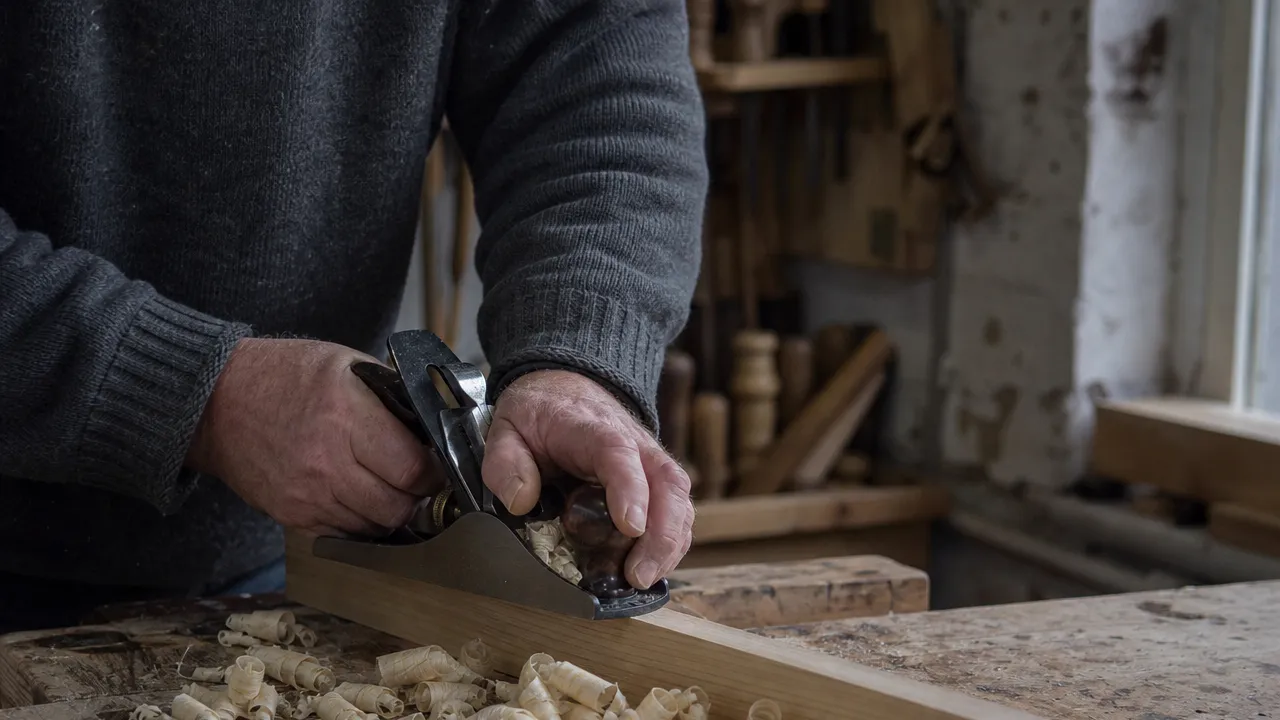
Carpentry is the only trade on this site with a vocabulary problem. Carpenter, joiner and cabinet maker describe the same skills to most people and are three separate searches to Google. Which word you have written on your website quietly decides how much of the country can find you.
01The word Carpenter, joiner, and the invisible half.
Strictly, a joiner makes things in a workshop and a carpenter fits them on site. Almost nobody outside the trade knows or uses that distinction.
What actually governs the search is geography. Ask for a joiner in Leeds or Glasgow and everyone knows what you mean. Ask in Reading and people hesitate. The habit is regional, it is strong, and it does not follow the technical definition at all.
So a site that only ever says "carpentry services" is not competing for the joiner searches in its own town, and the fix costs nothing. Use both words naturally, and give each one somewhere to live.
02The split You are probably running two businesses.
Site carpentry and bespoke joinery share a skill set and share nothing else. One is sold to builders, priced by the day, and won on turning up when you said you would. The other is sold to homeowners, priced by the piece, and won on how it looks.
They are found differently too. A builder looking for a second fix chippie asks two other builders. A homeowner wanting a fitted alcove unit searches for exactly that, at eleven at night, on a phone.
Most carpentry websites average the two into something vague. Separate them, and each half gets to be specific about what it is and who it is for.
03The levers What actually moves the needle for a carpenter.
- Pick your words, then own both Carpenter, joiner and cabinet maker are the same person to you and three different searches to Google. Joiner is used far more in the north and Scotland, carpenter more in the south. If you only ever write one of them, you are invisible to half the people looking for you.
- Split the site work from the bespoke work First and second fix sold to builders and bespoke fitted furniture sold to homeowners are two businesses wearing one set of overalls. They are found by different people searching different things, and putting them on one page makes you look like a jack of all trades to both.
- Photograph the joinery properly Yours is the trade with the most photogenic finished product and the worst photographs of it. A fitted alcove shot on a phone in bad light sells nothing. Ten good pictures of three finished jobs will out-perform anything I could write about craftsmanship.
- Say what you will not do If you do not hang doors, or you no longer take kitchen fitting, put it on the site. Every trade I speak to loses hours a week to enquiries they were never going to take, and the fix is one honest paragraph rather than a better phone manner.
The bespoke half is where the money is and where the website earns its keep. Site work will keep arriving through the builders you already know, website or not.
04The proof Your product is the most photogenic on this site.
A roofer photographs a roof that looks like every other roof. You make things people actually want to look at, and it is a genuine advantage almost nobody in the trade uses properly.
What that looks like in practice:
- Shoot on the last day of the job, not on a promise to return.
- Daylight, curtains open, no flash. Phones are fine in good light.
- The whole room, then the detail. People want to see how it sits in a real house.
- Ask for the before photograph too, because the change is the story.
- Get permission in writing, casually, while they are pleased with you.
Three jobs documented like that will do more for enquiries than any page of copy about attention to detail.
05The price What it costs, and what you get.
£297 a month. The website, on-page SEO, missed-call text-back, a review funnel, follow-up on every enquiry, one inbox and a business number. The full breakdown is on the pricing page.
No build fee and no minimum term. After three months you can buy the code outright for £1,000 and take it elsewhere.
The missed-call text-back matters more to you than to most. You spend your day with a machine running and ear defenders on, which is the single most reliable way to lose an enquiry that was worth four figures.
06The awkward ones Common questions from carpenters and joiners.
01 Should I call myself a carpenter or a joiner?
Whichever your customers say, and then use the other one as well. Traditionally a joiner makes it in a workshop and a carpenter fits it on site, but almost nobody outside the trade knows that. What matters is the regional habit: say joiner in Manchester and carpenter in Reading, and make sure both words exist somewhere on your website.
02 Most of my work comes from two builders. Is a website worth it?
It is worth it for the reason you might not expect. Depending on two builders is the risk, not the arrangement, and every carpenter I have met who lost one lost about half their year overnight. A website is how you build the direct domestic work that makes you less dependent, slowly, before you need it.
03 Bespoke work is all bespoke. How can I price anything on the site?
You cannot quote, but you can anchor. "A fitted alcove unit typically starts around £X" stops the enquiries from people expecting flat-pack money and reassures the ones who assumed it would be double. You are not publishing a price list, you are filtering your own inbox.
04 Does the Guild of Master Craftsmen or FMB membership help?
For confidence rather than rankings. There is no formal register for carpenters the way there is for gas or electrical work, so a customer has nothing official to check. That absence is exactly why a vetted membership, your insurance figure and real reviews do more work for you than for a trade with a legal register behind it.
05 What actually makes a carpentry enquiry worth having?
Bidding on "carpenter leads" runs to around £58 a click, which is the highest of any trade I pulled data for. That is what a lead reseller thinks one of your enquiries is worth. It tells you the value is in the bespoke end, not in hanging doors, and your website should be pointed at the work you actually want.
06 I have no photos of my best work. It is all in customers' houses.
Ask them. In my experience most people say yes, particularly if you offer to send them the photographs. Take a camera on the last day of a job rather than trying to go back later, because going back later almost never happens and that is why your portfolio has a gap in it.
If you mostly fit kitchens or do structural work, the builders page is probably closer. Other trades are listed here.
Send me your site and tell me whether you want more site work or more bespoke. Those are different jobs and I'll tell you honestly which one your website is currently set up for, which is usually neither. Book a call. Tell me what's going on.